
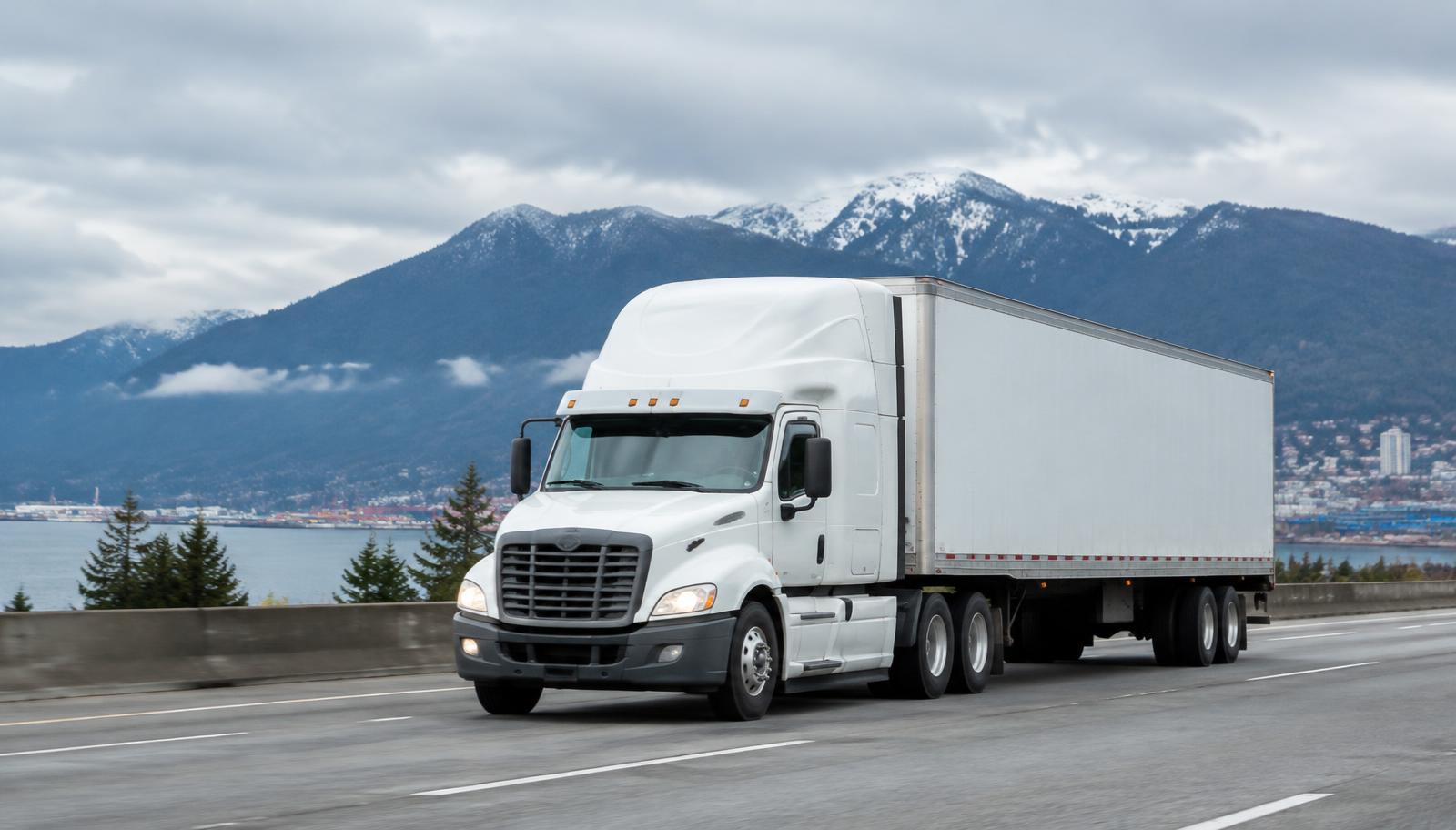
If you ship goods in or out of the Lower Mainland — whether through the Port of Vancouver, a Burnaby warehouse or a Surrey distribution centre — one of the first questions is always the same: how much will the trucking cost? The honest answer is that trucking rates in Vancouver depend on the details of your shipment. A single pallet travelling to Kelowna is priced very differently from a full trailer of refrigerated freight heading to Calgary or Toronto.
Transport Vancouver arranges freight transportation quotes based on your actual pickup location, delivery destination, equipment requirements and freight details. This article breaks down the factors behind the price so you know what to expect before you request a quote.
What Determines Trucking Rates in Vancouver?
Every freight quote is built from a handful of core variables. Understanding them helps you provide better information up front — and get a more accurate price back.
Shipping distance and delivery destination
Distance is the starting point for most pricing. A local delivery within Greater Vancouver costs less than a regional run to the Okanagan or a long-haul movement to Alberta or Ontario. Routes that involve mountain highways, ferry connections to Vancouver Island, or remote delivery points typically cost more than straightforward highway lanes between major centres.
Shipment weight, dimensions and pallet count
Carriers price freight around how much trailer space and weight capacity it uses. A compact, heavy skid can cost less to move than a light but bulky shipment that fills half a trailer. Accurate pallet counts, dimensions and weights matter — underestimating them is the most common reason a final invoice differs from an initial estimate.
Full truckload versus less-than-truckload
With full truckload (FTL) shipping, your freight occupies a dedicated trailer. With less-than-truckload (LTL), your pallets share trailer space with other shippers' freight and you pay only for the portion you use. The right choice depends on shipment size, timing and handling needs — covered in more detail below.
Equipment type
A standard dry van is the most common and usually the most economical option. Refrigerated (reefer) trailers for temperature-controlled freight, flat decks for building materials and machinery, and specialized equipment for oversized cargo all carry different pricing because of equipment cost and availability.
Fuel surcharges
Canadian carriers apply a fuel surcharge on top of the base rate, calculated as a percentage that moves with diesel prices. In British Columbia, published benchmarks such as the OBCCTC fuel surcharge schedule and carrier-published schedules like Speedy's are widely used reference points. Because the surcharge changes regularly, it is one reason quotes are typically valid for a limited time.
Pickup and delivery access
A commercial dock with a forklift is the simplest scenario. Residential addresses, construction sites, limited-access locations and deliveries that need a tailgate (liftgate) add time and equipment, which adds cost.
Loading, unloading and waiting time
Drivers are scheduled tightly. Hand-loading, sorting, or delays at the dock beyond an allowed window can result in detention or waiting-time charges.
Seasonal demand and scheduling
Freight demand in BC rises and falls through the year — retail peaks before the holidays, construction material surges in spring and summer, and winter weather can tighten capacity on mountain routes. When demand outpaces available trucks, rates rise. Appointments and strict delivery windows can also affect pricing because they reduce a carrier's scheduling flexibility.
Common Trucking Pricing Methods in British Columbia
Carriers and brokers generally quote in one of four ways:
Per-kilometre pricing
Some dedicated and truckload movements are quoted at a rate per kilometre travelled, sometimes with a minimum. This approach suits repeated runs on a fixed route, where both sides know the exact distance.
Full truckload pricing
FTL is usually quoted as a flat lane rate: one price for a dedicated trailer from origin to destination. The rate reflects the lane's distance, the equipment required, fuel, and how easy it is for the carrier to find a return load. Capacity matters too — when trucks are scarce on a lane, flat rates climb.
LTL freight pricing
LTL quotes are built from pallet count, dimensions, weight, freight characteristics (for example, stackable versus fragile, dry versus temperature-sensitive) and the handling involved. Freight passes through carrier terminals where it is consolidated with other shipments, so terminal handling and delivery-zone distance are part of the price. You can estimate local and regional LTL pricing yourself with the Transport Vancouver freight calculator.
Hourly trucking rates
Local work — a dedicated truck and driver for a day of deliveries, a special project, or multi-stop distribution — is sometimes billed hourly. This suits situations where the total time is easier to predict than the per-shipment cost.
Because market rates change constantly and depend on your specific freight, this guide intentionally avoids quoting dollar figures. Any rate worth relying on should be tied to your shipment details and a date.
Trucking Costs for Common Routes from Vancouver
Vancouver is the freight gateway for Western Canada. These are the lanes businesses ask about most, and the service options typically used on each:
| Freight Route | Typical Service Options |
|---|---|
| Vancouver to Burnaby | Local trucking, dedicated delivery |
| Vancouver to Surrey | Local trucking, LTL, FTL |
| Vancouver to Abbotsford | Regional trucking, LTL, FTL |
| Vancouver to Kelowna | LTL, FTL |
| Vancouver to Kamloops | LTL, FTL |
| Vancouver to Calgary | LTL, FTL |
| Vancouver to Edmonton | LTL, FTL |
| Vancouver to Toronto | Long-haul FTL, LTL, intermodal |
What each route actually costs depends on your shipment specifications, the equipment required, current capacity and timing. For a deeper look at the busiest Alberta lane, see our guide to Vancouver to Calgary freight shipping. For long-distance eastern movements, rail freight and intermodal options can be worth comparing against highway truckload.
LTL vs. FTL — Which Is More Cost-Effective?
LTL freight shares a trailer between multiple shippers. You pay for the space and weight you use, which makes it the economical choice for smaller shipments — typically anything from a single pallet up to several pallets. The trade-off is extra handling: your freight moves through terminals and shares the trailer with other cargo, so transit is less direct.
FTL dedicates the whole trailer to your freight. It costs more in absolute terms, but the per-pallet cost often beats LTL once a shipment grows large enough, and the freight travels directly from pickup to delivery with minimal handling. FTL also suits fragile or high-value freight where fewer touches mean fewer damage opportunities, and time-sensitive loads that cannot wait for terminal consolidation.
A practical rule: compare both options once your shipment approaches double-digit pallet counts. Transport Vancouver arranges both LTL and FTL services, and very large shipments — anything over about 13 pallets — are quoted as full truckloads tailored to the load.
Additional Freight Charges to Consider
Beyond the base rate, Canadian freight quotes often include accessorial charges. The common ones:
- Fuel surcharge — a percentage tied to published diesel price benchmarks.
- Tailgate (liftgate) delivery — when the destination has no dock or forklift.
- Inside delivery — freight moved beyond the threshold of the delivery point.
- Detention and waiting time — delays at pickup or delivery beyond the allowed window.
- Appointment delivery — scheduled delivery times required by the receiver.
- Limited-access delivery — residential areas, event venues, construction sites and similar locations.
- Storage and redelivery — when a receiver cannot accept freight as planned.
- Specialized equipment — reefer, flat deck, or over-dimensional gear where required.
Which of these applies — and what each costs — depends on the carrier's terms and your shipment requirements. The best protection against surprise charges is complete, accurate information at the quoting stage.
How to Reduce Your Trucking Costs
Seven practical ways businesses in BC keep freight spending down:
- Consolidate shipments when practical — fewer, fuller loads price better than many small ones.
- Provide accurate dimensions and weights so the quote matches reality.
- Allow flexible pickup and delivery windows; flexibility is valuable to carriers.
- Compare LTL and FTL options for mid-size shipments instead of defaulting to one.
- Plan around peak periods where your calendar allows it.
- Package and palletize freight properly to avoid damage, claims and re-handling.
- Share complete pickup and delivery details up front, including dock access and hours.
How to Get an Accurate Trucking Quote in Vancouver
An accurate quote starts with complete information. When you request pricing, be ready to provide:
- Pickup postal code and city
- Delivery postal code and city
- Freight description (what the goods are, how they are packaged)
- Pallet count
- Total weight
- Dimensions of each pallet or piece
- Equipment requirements (dry van, reefer, flat deck, tailgate)
- Ready date and any delivery deadline
- Special handling requirements (fragile, temperature-sensitive, dangerous goods)
For local and regional LTL shipments you can start with the freight calculator, which produces an instant estimated rate based on the same pricing structure our quotes use. Larger or more complex shipments are best quoted directly.
Frequently Asked Questions About Vancouver Trucking Rates
How are trucking rates calculated in Vancouver?
Rates combine a base charge — built from distance, weight, pallet count and equipment — with a fuel surcharge and any applicable accessorial charges such as tailgate delivery or appointment scheduling. Market conditions on the lane influence the final number too.
Is LTL cheaper than FTL shipping?
For small shipments, yes — you pay only for the trailer space you use. As shipment size grows, the total LTL price can overtake the cost of a dedicated trailer, at which point FTL becomes the better value with the added benefit of direct, lower-handling transit.
What affects Vancouver to Calgary trucking rates?
Shipment size, weight, equipment, fuel surcharge levels, seasonal capacity and how the freight needs to be handled at each end. Our Vancouver to Calgary guide covers the lane in detail.
Are fuel surcharges included in freight quotes?
They should be shown as a clear line item. Fuel surcharges are usually a percentage of the base rate tied to published benchmarks, so the exact amount shifts with diesel prices between the quote date and the ship date.
How can I get a trucking quote in BC?
Submit your shipment details through the freight quote form, try the freight calculator for an instant estimate, or call 604-835-7200. A coordinator reviews your details and responds with pricing for your route and freight.
Do freight rates change throughout the year?
Yes. Seasonal demand, weather, fuel prices and available truck capacity all move rates. Quotes are typically time-limited for this reason — if your ship date is weeks away, confirm pricing closer to the date.
The Bottom Line
Trucking rates in Vancouver are not one-size-fits-all. Distance, shipment size, equipment, fuel and the details of pickup and delivery all shape the price — which is why the most reliable number is always the one calculated from your actual freight.